


The New Space Community
It is easy to think of the New Space industry as hardware and launch windows—rockets and payloads, satellites and stations. But if you look closer, past the technical specs and orbital diagrams, you’ll see something more subtle taking shape: a brand community in orbit.
This community is not bound by a single company, country, or market segment. It is an interconnected network of visionaries, engineers, communicators, educators, policymakers, investors, and everyday space enthusiasts. What binds them together is not just the technology they develop, but the shared belief that space is no longer the sole domain of governments and aerospace giants. Instead, it is a growing, collaborative ecosystem—one that behaves like a brand community in every meaningful way.
Table of Contents
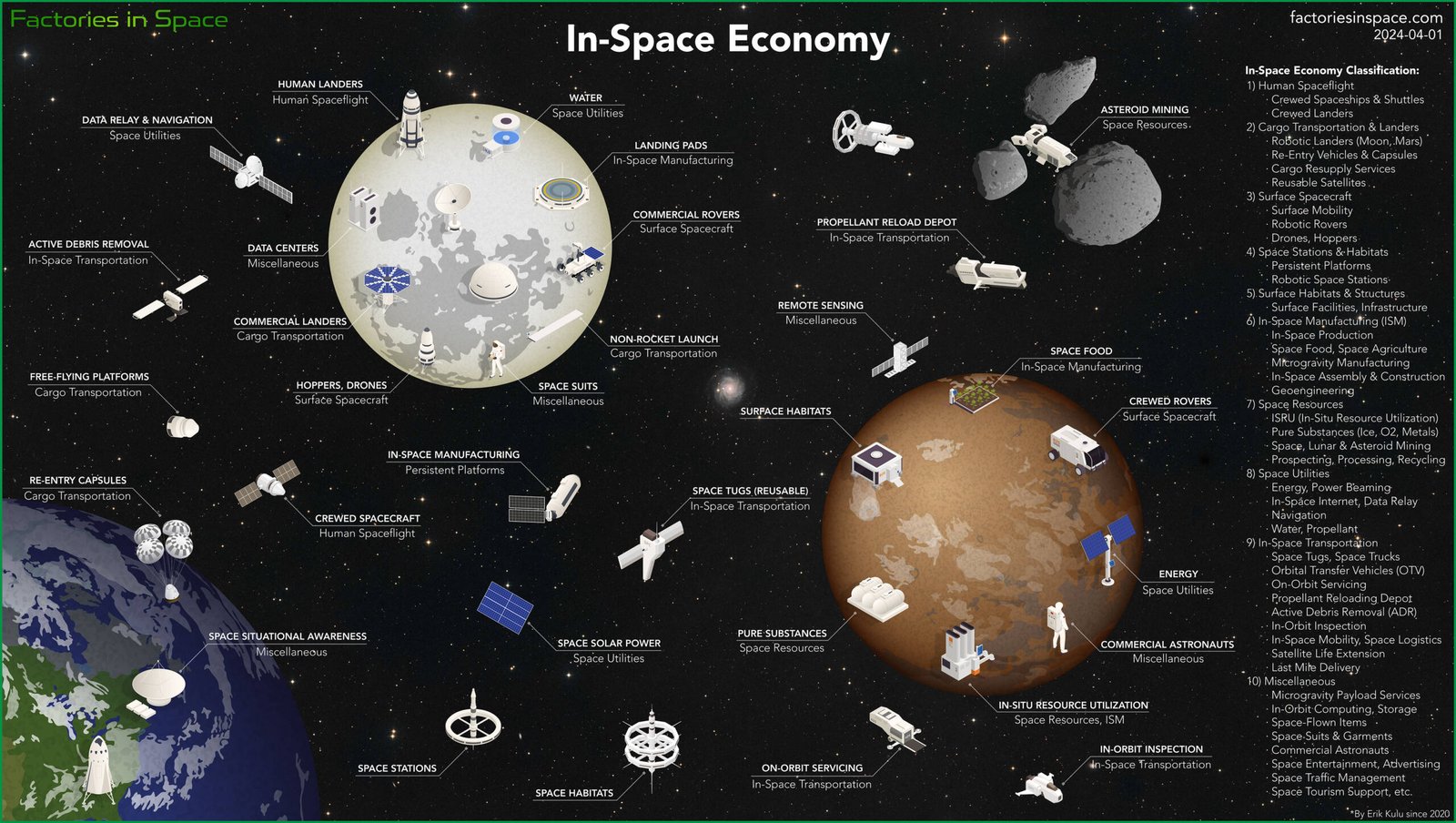
Image Source: Factories in Space
From Industry to Identity
In brand community theory, belonging begins when identity aligns with purpose. Harley-Davidson riders see themselves not as customers, but as part of a tribe. Apple users are not buying devices – they are buying into a culture.
The New Space Starconomy is cultivating a similar sense of belonging. Whether you’re an orbital debris mitigation specialist in Luxembourg, a satellite imaging startup founder in Colorado, or a space law scholar in Tokyo, your work connects to a collective mission: advancing humanity’s presence and prosperity in space while ensuring its benefits flow back to Earth.
This shared identity is strengthened through events like the International Astronautical Congress, Space Symposium, or even the informal collaborations on Space Twitter. The language is technical, yes, but the underlying tone is aspirational. It is a community that defines itself as much by its dreams as by its deliverables.
Why the New Space Starconomy Behaves Like a Brand Community
A true brand community is defined by three characteristics:
- Shared Consciousness – a collective understanding of purpose and identity.
- Rituals and Traditions – behaviors that reinforce belonging and recognition.
- A Sense of Moral Responsibility – a commitment to help one another succeed.
The NewSpace Starconomy exhibits all three.
Shared Consciousness
Emerges in the universal language of space milestones – launches, first-light images, successful docking maneuvers. These are celebrated across the ecosystem, regardless of who accomplishes them.
Rituals and Traditions
Surface in recurring industry events, the countdowns that unite observers worldwide, and even the symbolic moments like mission patches or naming conventions for spacecraft.
Moral responsibility
Appears in collaborations that defy traditional competitive boundaries: companies sharing launch data to improve safety, scientists publishing open-source findings, advocacy groups pushing for sustainable orbital practices.
The Communicator’s Role: From Storyteller to Steward
For strategic communicators, recognizing the New Space Starconomy as a brand community changes the game. Our job is no longer just to explain the technology – it is to nurture the culture.
We become stewards of a narrative that is bigger than any one organization, ensuring that the collective story remains authentic, inclusive, and forward-looking. This means championing the voices of smaller players alongside industry leaders, spotlighting not only innovation but the human values driving it, and connecting technical achievements to the tangible benefits on Earth – whether that’s climate monitoring, disaster response, or global connectivity.
It also means safeguarding trust. In any brand community, authenticity is the currency. Overpromising capabilities or downplaying risks erodes credibility not just for one company, but for the entire ecosystem. In New Space, where public perception shapes policy, funding, and investment, trust is mission-critical.
Beyond Orbit: Building for the Long Haul
If New Space is to endure as a brand community, it must continuously invite participation – not just from engineers and investors, but from educators, policymakers, artists, and the broader public. The community grows stronger when more people see themselves as stakeholders in the future of space.
Like any strong brand community, the New Space Starconomy must be intentional about inclusion, sustainability, and shared value creation. This is not just an engineering challenge – it is a brand strategy imperative.
Because in the end, the rockets are temporary. The community is what lasts.
Framework: Mapping the New Space Ecosystem as a Brand Community
Recognizing the New Space Ecosystem as a brand community opens the door for structured, strategic engagement. Below is a framework that links brand community dynamics to strategic communication touchpoints, ensuring that every action reinforces identity, trust, and participation.
Shared Consciousness
The collective understanding of purpose and identity.
Strategic Communication Touchpoints:
- Narrative Alignment – Develop messaging that connects each organization’s achievements to the broader mission of advancing humanity’s role in space.
- Shared Milestone Storytelling – Celebrate ecosystem-wide events (launch successes, scientific breakthroughs) in a unified, cross-brand way.
- Consistent Lexicon – Encourage common language around New Space values—innovation, sustainability, inclusivity—to reinforce belonging.
Rituals and Traditions
Behaviors and symbols that strengthen bonds.
Strategic Communication Touchpoints:
- Event Integration – Position brand presence not just at flagship industry gatherings but in smaller, niche community meetups where loyalty is built.
- Symbolic Branding – Leverage mission patches, badges, and campaign hashtags to create tangible identifiers for community members.
- Countdown Culture – Build social media rituals around launches, landings, and mission milestones that the community can participate in together.
Moral Responsibility
A shared duty to help others succeed.
Strategic Communication Touchpoints:
- Knowledge Exchange Platforms – Host webinars, open-source data repositories, or collaborative workshops that strengthen collective problem-solving.
- Public Trust Initiatives – Communicate sustainability efforts (orbital debris mitigation, equitable access) transparently to protect community credibility.
- Peer Support Visibility – Highlight cross-company collaborations and mutual aid stories, showing the ecosystem’s cooperative spirit.
Community Expansion
Actively inviting and integrating new members.
Strategic Communication Touchpoints:
- Public Engagement Campaigns – Connect space achievements to tangible Earth benefits through relatable storytelling.
- Interdisciplinary Outreach – Partner with education, arts, and environmental sectors to broaden the definition of “space community.”
- Onboarding Journeys – Create easy-entry educational content that turns the “space curious” into active contributors.
Trust & Authenticity Safeguards
Protecting the credibility of the brand community.
Strategic Communication Touchpoints:
- Transparency Protocols – Avoid inflated claims and manage expectations proactively.
- Ethics Integration – Ensure every communication reflects sustainability, inclusivity, and ethical responsibility.
- Reputation Monitoring – Implement real-time media and sentiment analysis to detect and address credibility risks across the ecosystem.
The Brand Community Equation for New Space
Shared Consciousness + Rituals + Moral Responsibility + Expansion + Trust
= A resilient, credible, and thriving New Space Brand Community capable of outlasting individual technologies and companies.
About the Author
Michael Daily, APR, has been providing strategic communications and branding strategy expertise and support to organizations since 1996. He is the owner of NewSpace Brand Builders, a firm specializing in strategic communications and brand design, strategy, and management within the Space and Defense Industry. You can reach Mike at mike.daily@newspacebb.com