


Strategic Branding for Space Supply Chain Success: Elevating Credibility, Partnerships, and Market Presence
There is a persistent misconception in the space industry that branding belongs at the surface level of the enterprise, something applied after the engineering is complete, the contracts are secured, and the flight hardware is qualified. For companies operating within the space industry supply chain, this assumption is not only outdated, but also strategically dangerous. In an ecosystem defined by technical complexity, long procurement cycles, and unforgiving performance requirements, brand strategy is not decoration. It is infrastructure.
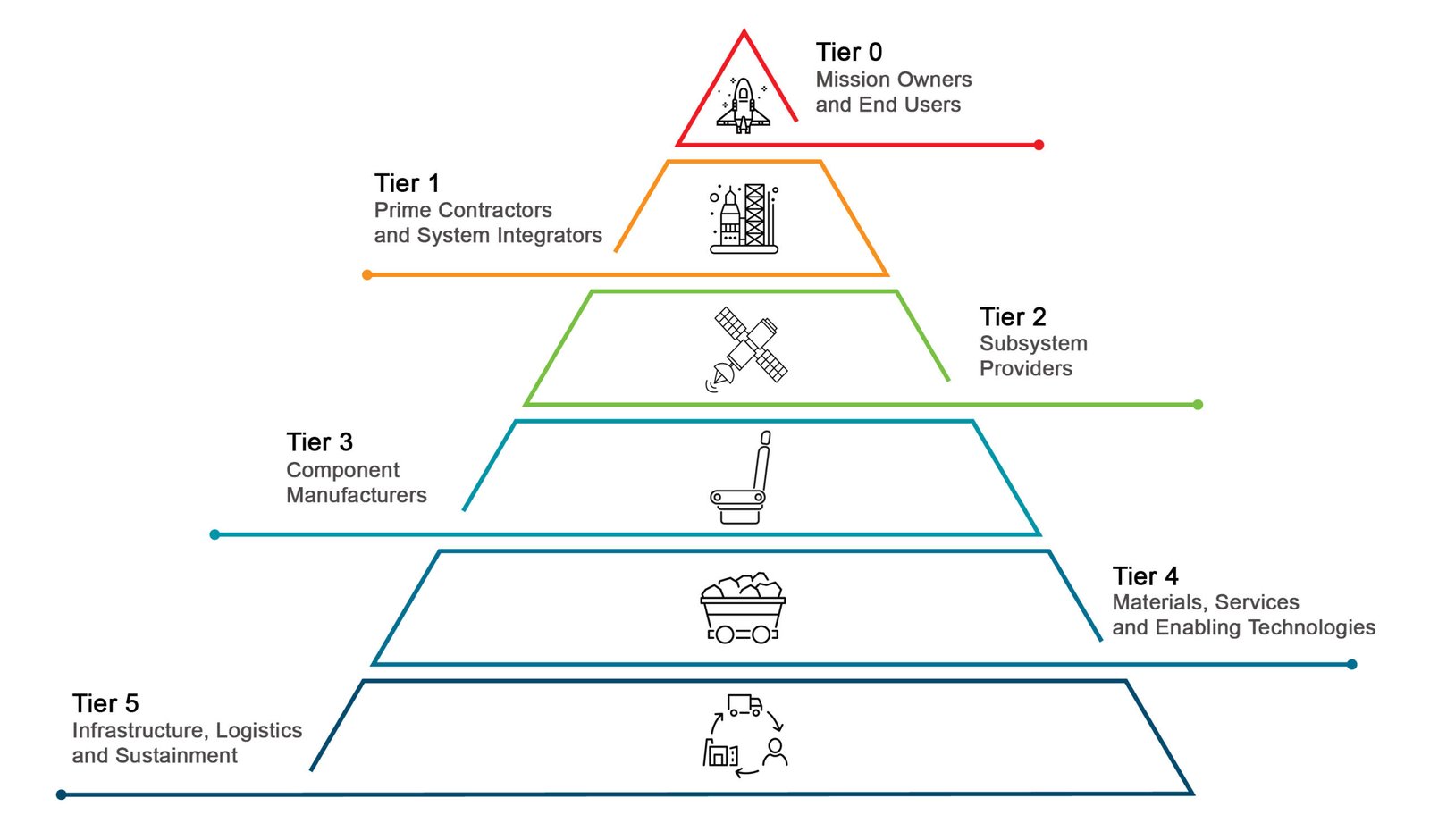
The modern space supply chain is a tightly coupled system of component manufacturers, subsystem providers, software developers, integrators, launch service partners, and mission operators. Each participant depends on the credibility, reliability, and clarity of every other node in the chain. A failure of trust at any point introduces friction across the entire system. Strategic branding, when properly understood and applied, functions as a trust multiplier. It signals competence before the first technical interchange meeting, reinforces confidence during contract execution, and sustains reputation long after deployment.
Credibility
Credibility is the first currency of the space supply chain. Unlike consumer markets, where awareness can precede capability, space enterprises are evaluated on their ability to deliver under extreme constraints. Procurement officers, prime contractors, and government stakeholders assess far more than price and performance specifications. They assess whether a company understands its role in the broader mission architecture. A disciplined brand strategy articulates this understanding with precision. It defines what the organization does, why it matters, and how it reduces risk for partners upstream and downstream.
This clarity is particularly critical for Tier Two, Tier Three, and Tier Four suppliers. These organizations often possess extraordinary technical expertise yet struggle to communicate their value beyond narrow engineering audiences. Strategic branding translates complex capability into strategic relevance. It aligns technical language with mission outcomes, positioning the supplier not as a vendor, but as a mission-enabling partner. In doing so, it elevates perception without exaggeration and strengthens trust without theatrics.
Consistent Branding
Partnership development within the space supply chain is rarely transactional. It is relational, iterative, and cumulative. Long-term programs demand consistency of performance and consistency of purpose. Strategic branding supports this continuity by providing a stable narrative that partners can rely upon. When an organization presents itself with coherence across leadership messaging, technical documentation, stakeholder engagement, and market presence, it reduces uncertainty. In a sector where uncertainty carries significant costs, this reduction has measurable value.
Effective brand strategy also shapes how companies are perceived within industry networks and professional communities. Conferences, working groups, standards bodies, and consortia are not peripheral activities. They are arenas where credibility is reinforced or eroded. Organizations that approach these environments with a clear brand posture, one grounded in competence, collaboration, and contribution, are more likely to be invited into strategic conversations. Over time, this visibility compounds, opening doors to partnerships that might otherwise remain inaccessible.
Market presence
Market presence in the space supply chain is not about volume or visibility for its own sake. It is about being known for something specific and essential. Strategic branding enables organizations to occupy a defined position in the ecosystem. It answers a simple but critical question for stakeholders: When this capability is required, who do we call? Companies that fail to answer this question clearly often find themselves competing on price or excluded from consideration altogether.
In Summary
As the Starconomy continues to expand, the space supply chain will only grow more complex and more competitive. New entrants, international players, and nontraditional suppliers are reshaping the landscape. In this environment, technical excellence remains mandatory, but it is no longer sufficient. Strategic branding provides the connective tissue between capability and opportunity. It ensures that excellence is recognized, remembered, and trusted.
Ultimately, strategic branding for space supply chain success is about alignment. It aligns internal culture with external promise. It aligns technical performance with stakeholder expectations. It aligns individual companies with the missions they enable. When done well, branding does not distract from engineering. It amplifies it. It gives form to credibility, structure to partnerships, and permanence to market presence.
In a domain where failure is measured in mission loss and success is measured in sustained trust, strategic branding is not a luxury. It is a requirement for those who intend not only to participate in the space economy, but to shape it.
About the Author
Michael Daily, APR, has been providing strategic communications and branding strategy expertise and support to organizations since 1996. He is the owner of NewSpace Brand Builders, a firm specializing in strategic communications and brand design, strategy, and management within the Space and Defense Industry. You can reach Mike at mike.daily@newspacebb.com
Article photo provided by isdc.nss.org