The global space industry is entering an era where communication velocity increasingly determines strategic influence.
Launches occur weekly. New commercial ventures emerge constantly. Nations compete for symbolic leadership. Investors search for clarity within technical complexity. Public audiences consume information through fragmented digital channels measured in seconds rather than sustained attention spans. In this environment, one of the most important yet underexamined disciplines within space communications is the concept of strategic compression.
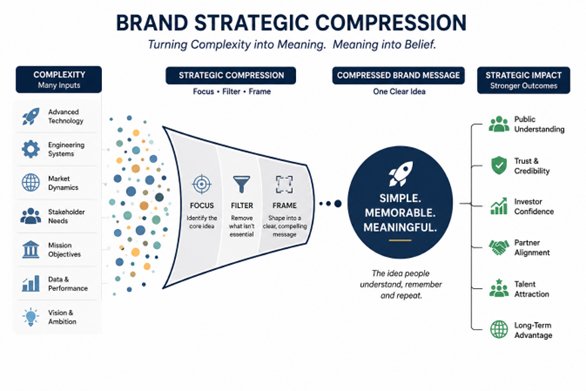
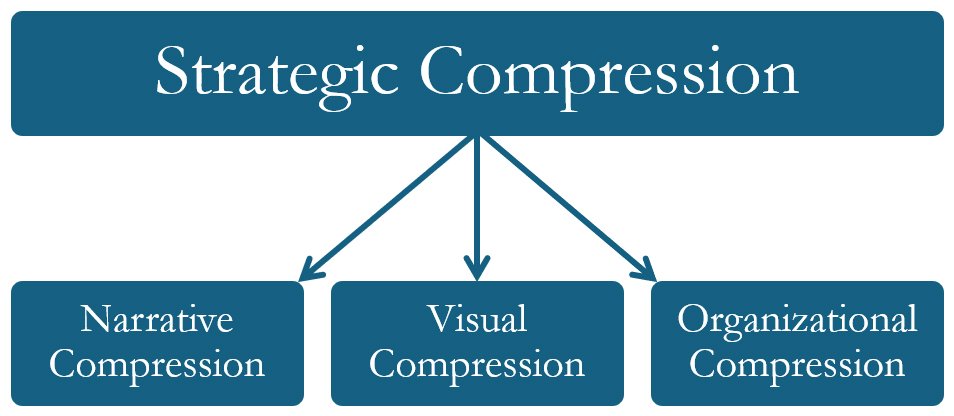
Strategic compression is the process of reducing a large, multidimensional, technically complex idea into a concentrated narrative or symbolic form that can be rapidly understood, emotionally retained, and consistently repeated by target audiences.
For space communications professionals, this is no longer optional.
It is operationally essential.
The modern space sector is inherently difficult for public audiences to interpret. Most stakeholders outside the industry cannot meaningfully evaluate orbital mechanics, launch architectures, propulsion systems, autonomous rendezvous capability, payload integration procedures, or lunar resource extraction frameworks. The technical sophistication of the industry often exceeds the communication literacy of the audiences organizations must influence.
This creates a dangerous strategic gap.
When organizations fail to compress complexity into understandable meaning, audiences default to confusion, indifference, or narrative substitution generated by competitors, media speculation, or public misconception. The organizations that succeed in the modern space economy are increasingly those capable of translating technical ambition into emotionally accessible strategic identity.
In simple terms, strategic compression converts complexity into belief.
This principle has existed since the beginning of the space age.
The Apollo program was one of the greatest examples of strategic compression in modern history. The United States government condensed immense geopolitical competition, technological advancement, industrial mobilization, and ideological positioning into a singular narrative understood globally: America was going to the Moon.
That phrase compressed an extraordinary amount of meaning:
- National confidence
- Scientific superiority
- Industrial capability
- Democratic ambition
- Technological leadership
- Civilizational optimism
The public did not need to understand rocket staging sequences or navigation algorithms to understand what Apollo represented. The narrative architecture performed the strategic work.
The same principle operates today throughout the commercial space ecosystem.
SpaceX may operate some of the most technically sophisticated launch and spacecraft systems in history, yet its most strategically powerful communication asset may be a single compressed phrase: “Making life multiplanetary.”
That statement transforms highly complex engineering programs into a civilizational narrative ordinary audiences can emotionally process. It compresses:
- Mars colonization
- Long-term species survival
- Reusable launch economics
- Human expansion
- Entrepreneurial ambition
- Future-oriented optimism
into one memorable conceptual framework.
Another example is Blue Origin and its long-running phrase, “Gradatim Ferociter,” or “Step by Step, Ferociously.” The phrase strategically compresses the company’s public identity into disciplined, long-term infrastructure building rather than rapid public spectacle. It communicates patience, methodical advancement, engineering seriousness, and generational ambition.
Likewise, Rocket Lab effectively compresses its positioning around responsiveness and accessibility for small satellite operators. Its branding architecture consistently communicates agility, precision, frequency, and commercial practicality rather than grand civilizational rhetoric. This strategic compression allows Rocket Lab to occupy a distinct psychological position within the broader launch marketplace.
National space programs also employ strategic compression extensively.
China has strategically compressed much of its modern space identity around themes of national rejuvenation, technological self-sufficiency, and disciplined long-term advancement. The country’s space achievements are consistently framed as evidence of national modernization and geopolitical maturity.
India successfully compressed the narrative surrounding the Chandrayaan-3 lunar landing into a story of cost-effective innovation, national pride, and emerging technological leadership. Global audiences repeatedly focused on one central compressed message: India reached the Moon efficiently and affordably.
Even smaller nations leverage strategic compression effectively.
Luxembourg strategically positioned itself as a hub for commercial space finance and space resource policy. Rather than attempting to compete directly with superpowers in launch capability, Luxembourg compressed its national space identity into a focused concept: the business and legal gateway of the future space economy.
This is strategic compression functioning at a national branding level.
For communications professionals working within the space sector, understanding this mechanism is critical because the industry increasingly operates inside an attention economy. Visibility, public trust, investor confidence, talent acquisition, government support, and partnership attraction are all shaped by narrative clarity.
The challenge is that many space organizations communicate as engineers while expecting audiences to respond emotionally.
They overwhelm stakeholders with technical detail while underinvesting in symbolic coherence.
A launch company may describe propulsion specifications without clearly communicating why its existence matters. A satellite startup may explain data architecture while failing to articulate its strategic role within the future global economy. A national space initiative may discuss policy frameworks without constructing a compelling public narrative around national identity, exploration, or long-term societal value.
For example, many early small launch startups focused communications almost entirely on payload mass, engine architecture, and orbital insertion capability. Meanwhile, companies with stronger strategic compression framed themselves around larger emotionally resonant concepts such as accessibility, democratization of space, national resilience, or orbital infrastructure development. The latter group often generated greater investor and media attention even when technical differences between competitors were relatively narrow.
Strategic compression solves this problem by identifying the core idea an organization wants permanently associated with its identity.